Lessons from Coimbatore, India : Part 2 – Tea, Hills & Heritage

Part Two…
One of the things I have come to appreciate about travelling is resisting the urge to treat each destination like a checklist. Where possible, I like to arrive a few days early. It gives me time to settle in, wander without an agenda and let a place introduce itself on its own terms. Those extra days also make planning for the remainder of the stay easier. This is because after a conversation or two with locals, you quickly discover what is worth seeing, what can wait, and you discover what no guidebook could have told you.
It is through local recommendations and those unscripted moments that a place truly begins to reveal itself. It is how I often discover the heart of a place’s food culture. If there is anything I now know to be true from years of travel, it is this: through food, we encounter the love, language and life of a people and a place.
It is in these encounters with locals that we notice the finer details and gain a deeper understanding. More often than not, it is through the local lens and everyday interactions that we learn far more than headline attractions could ever teach us. In many ways, a conversation with a local can offer insights that months of reading and research never will.
So, arriving in Coimbatore with the advantage of travelling alongside someone native to the land, who in turn connected us with warm-hearted locals, meant we were in for a treat.
The economist in me had done my homework. I had researched the usual things: what drives the local economy, the major industries, education, culture and the broader standard of living. It gave me a framework, but it was the people we met who brought the place to life. They introduced us to corners of the region that rarely make it into guidebooks, yet somehow become the moments you remember long after you have returned home.

Ooty (Udhagamandalam) – Tamil Nadu
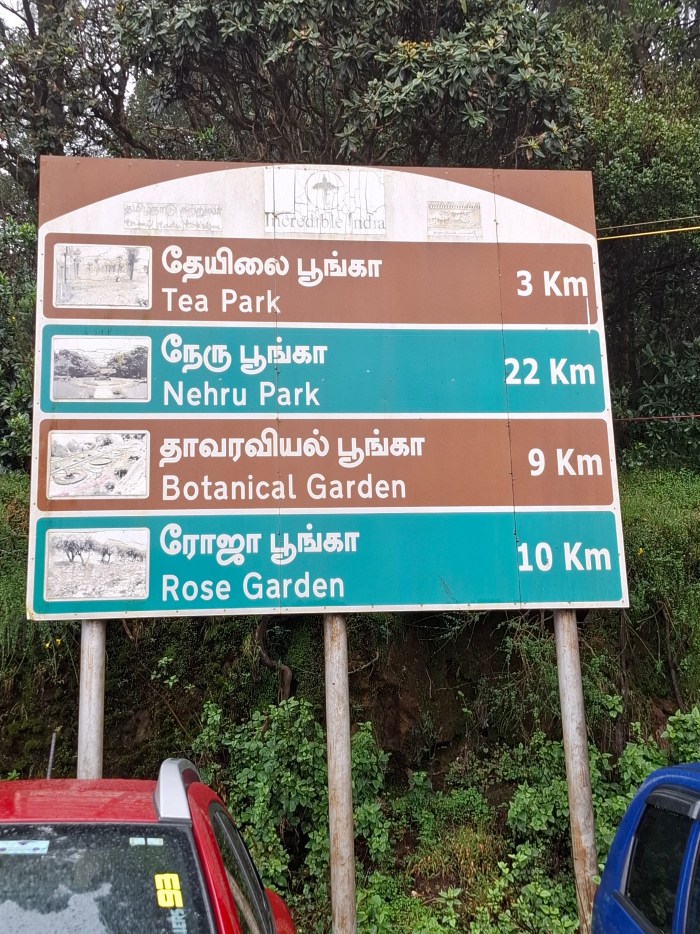
First on the list was somewhere I had not encountered in any of my research: the tea-growing hills of Ooty, nestled within the famous Nilgiris district of Tamil Nadu. It was the perfect destination for our second day and, as a confessed tea enthusiast, it did not take much convincing for me to commit!
By the time breakfast was over on our second day in Coimbatore, we were feeling rather optimistic about what lay ahead. Although it was our first morning at the buffet, we had already discovered what would become our breakfast ritual for the rest of our stay. The omelette station would become something of a daily ritual in the days to come. The fresh rotis were impossible to resist, and I had happily embraced the idea that curry is a perfectly acceptable breakfast food in South India. In the days that followed, the chef and staff would come to recognise some of our usual orders before we had even arrived to claim a table. Add to that a few cups of tea and warm exchanges with one of the waiters, who had taken a genuine interest in our group, and the day was already off to an excellent start.
With full stomachs and high expectations, we met in the hotel lobby, ready for our day trip to Ooty. We confidently marched outside expecting a spacious SUV. Technically, one did arrive. It just wasn’t quite the version we had all imagined. Let’s just say the definition of “comfortably seats five” appears to be interpreted a little differently in parts of India.
If you’ve ever travelled on a kombi or minibus taxi in parts of Africa, where four people somehow become six and personal space becomes a distant memory, you’ll know exactly what I mean. By the time we had squeezed ourselves, our backpacks and camera gear into the vehicle, we were all rather invested in reaching our destination. Not because of the distance, but because we had just discovered that “comfortably seats five”, on this occasion, was a phrase open to considerable interpretation. It seemed the vehicle was designed, realistically for four, but with a little creativity, determination and some strategic rearranging, five could absolutely make it work. Thankfully, good company, plenty of laughter and the promise of exceptional tea proved more than enough to distract us from our temporary lack of elbow room.
The drive itself was magnificent. The morning was warm without being oppressive, the kind of weather that finally allows you to enjoy without immediately questioning your wardrobe choices. I was comfortably lathered in sunscreen, and we were dressed in T-shirts, walking shoes and sunglasses. With fully charged phones, enough storage space for countless photos and a photographer ready with his camera, we felt prepared for whatever the day would bring. We also had a wonderfully knowledgeable driver who, over the course of the journey, quietly became far more than someone behind the wheel.

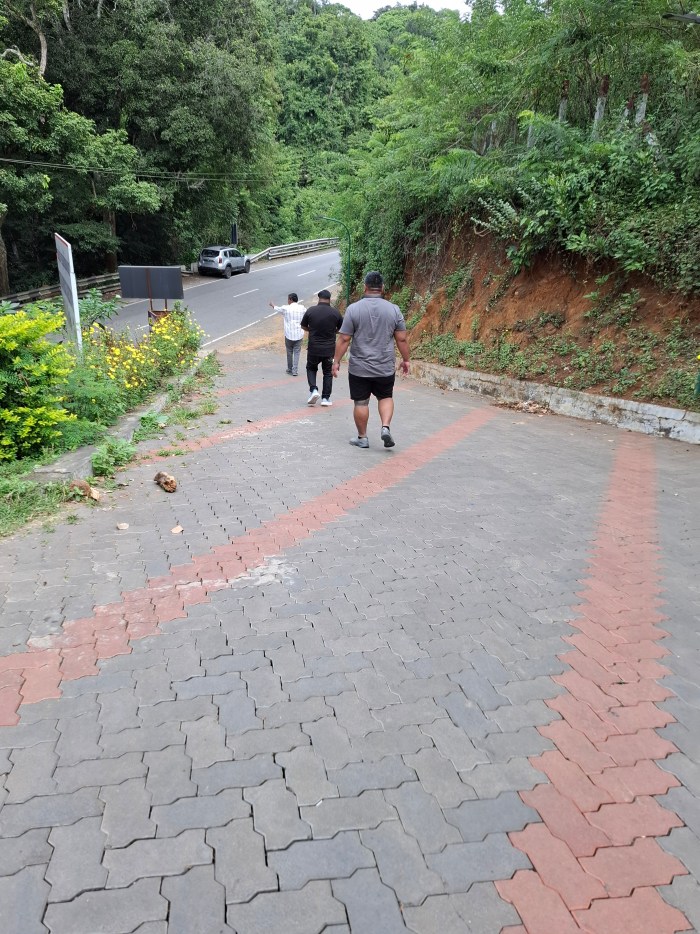
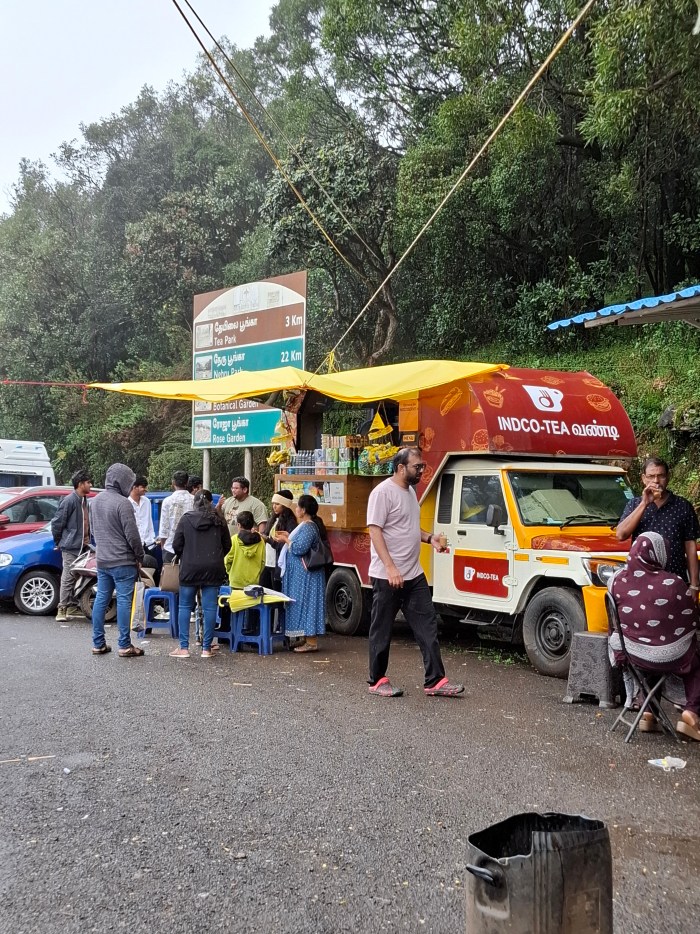

As the city gradually disappeared behind us, something unexpected happened. The journey began to feel strangely familiar. The packed buses carrying entire communities, trucks loaded beyond what appeared physically possible, roadside vendors, motorbikes weaving effortlessly through organised chaos and families going about ordinary life stirred memories of Zimbabwe for me. Different country. Different language. Yet there was something deeply recognisable about it all. Travel has a curious way of reminding you where you’ve come from while introducing you to somewhere entirely new.
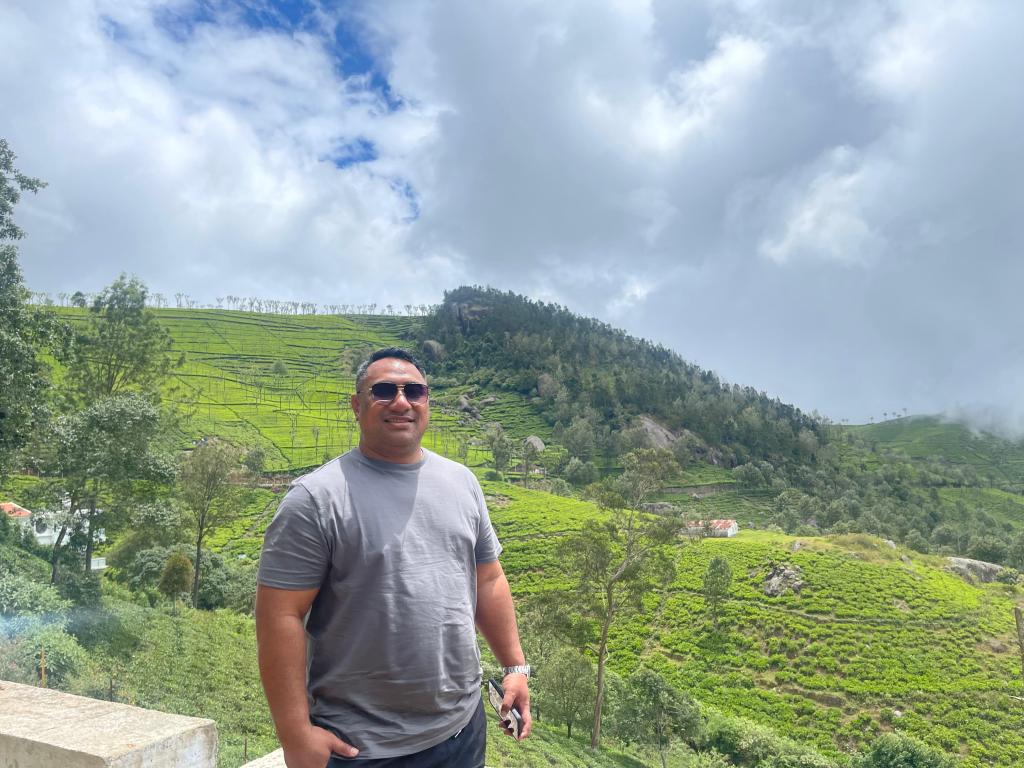
We stopped several times along the winding roads, each viewpoint revealing another endless blanket of tea plantations stretching across the hills. Every stop seemed somehow quieter than the last. The air grew cooler, our pace softened and conversation slowed. There is something deeply therapeutic about standing in silence overlooking thousands upon thousands of perfectly cultivated tea bushes. It is difficult to explain unless you have experienced it. For me, it was the moment when my economist’s lens naturally came into focus. I found myself thinking beyond the beauty of the landscape and the quality of the products, considering the local economy that sustains it, the employment opportunities it creates, the cultural connections it preserves, and the intergenerational benefits it can provide. I was also thinking about the delicate balance between embracing globalisation and protecting the very qualities that make the region and its products unique, valuable and competitive.
Yet, alongside those thoughts, there was another response that was far less analytical. I simply stood there in awe of God’s creativity and the intricacies of His design, reflecting on purpose, timing and legacy. It was a reminder that places, people and industries are not just shaped by economics, but by stories, generations and the fingerprints of something far greater than ourselves.
As we stood taking it all in, each of us seemed to notice something different. Snippets of Scripture surfaced, fresh perspectives emerged, and new layers of thought began to form as we reflected on our upcoming presentations. Somehow, the view created space not only to admire God’s creation, but also to think, pray and prepare.
I could not help but consider how each hill represented generations of labour. Every row reflected discipline, patience and knowledge passed down over time. Long before visitors arrived with cameras and coffee-table books, families had been shaping these hills with extraordinary care, creating livelihoods and contributing to the identity and economy of the region.
Silvertip Cafe – Kotagiri Town
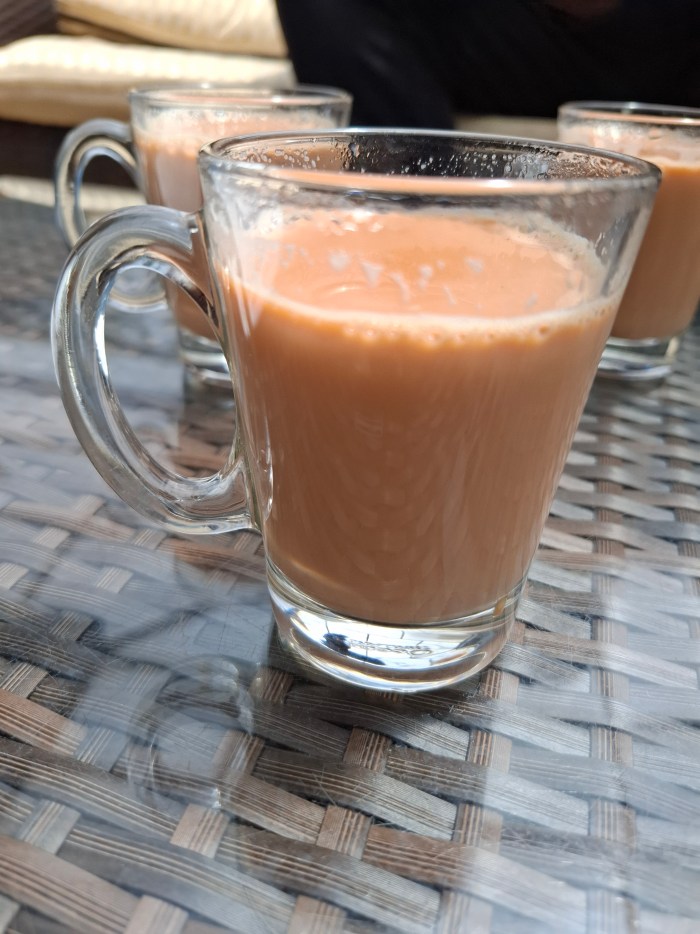
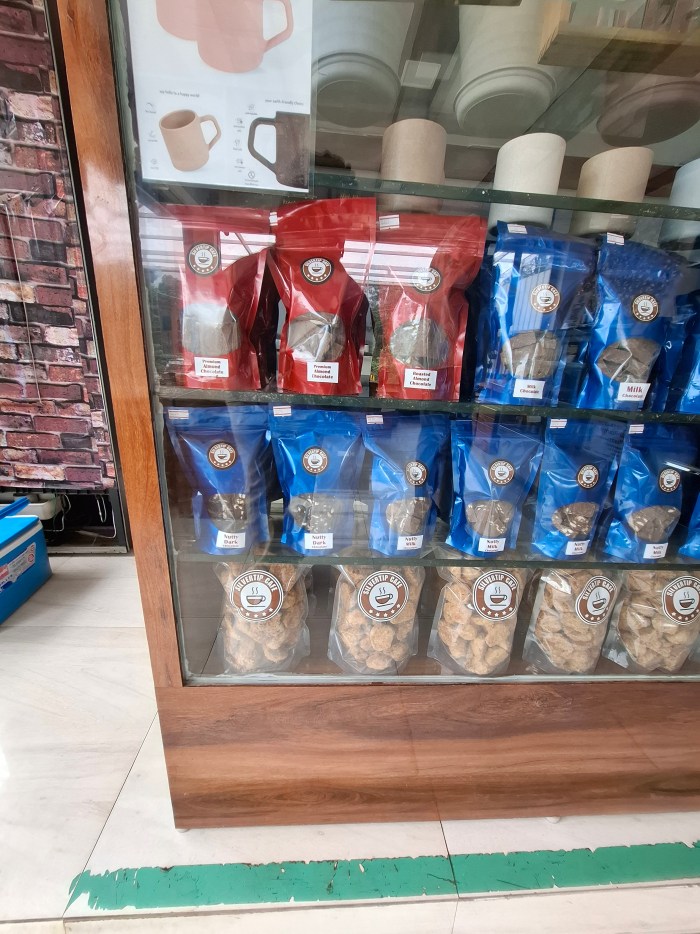
Our first tea stop was Silver Tip Café. Naturally, ordering anything other than masala chai would have felt almost disrespectful. It was my first cup of freshly brewed Indian tea. At breakfast, I had instinctively played it safe, opting for a hot chocolate from the international selection. I suppose that is often how we orient ourselves in a new country: we reach first for what is familiar before gradually becoming curious enough to embrace what is new.
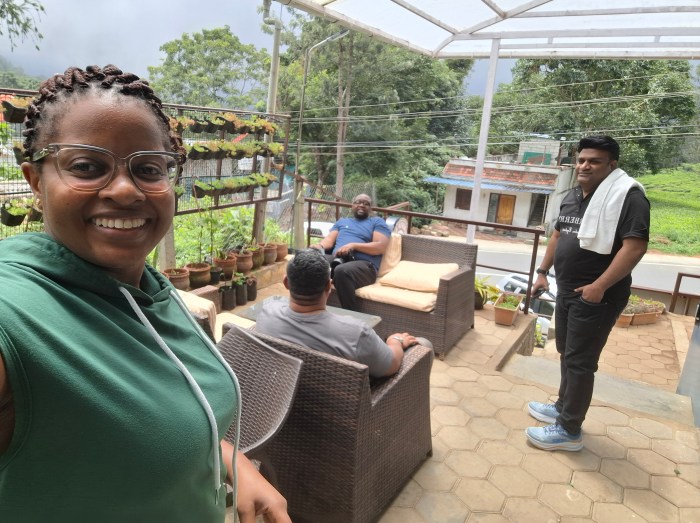
We chose a sunny spot outdoors for our moment of pause. Cool enough and shaded with a few more tea bushes across the road from where we sat. Sitting there with a cup of masala chai, surrounded by the very hills that had nurtured the tea leaves, I realised there couldn’t have been a better place to begin that journey. I had to take a photo with the café owner and staff , I said to them, a reminder of a memorable time . We chatted with several locals, took more photographs than I care to admit and found myself smiling at how something as simple as sharing tea immediately slows people down.
I have always known that tea, is rarely just tea. It is an invitation into a space for conversation. To sit and enjoy a cup is to give oneself the permission to pause and probe at life’s many problems and passions simultaneously if you permit your person to do so.





Chamraj Tea Centre
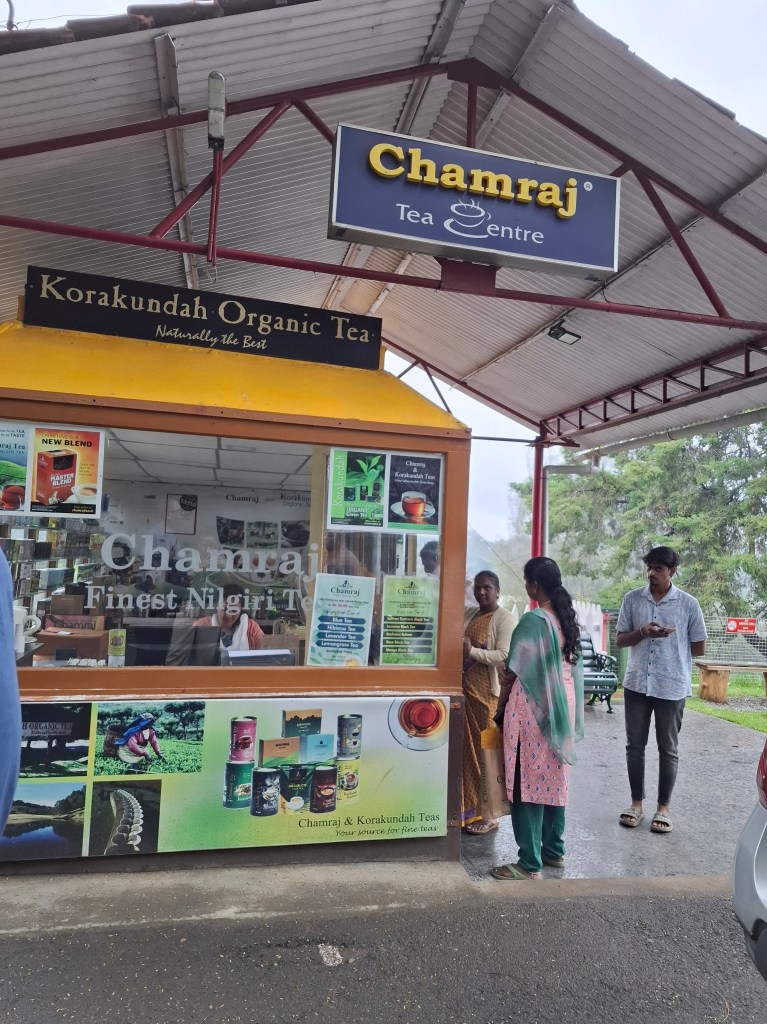
Further along our journey we eventually arrived at Chamraj Tea Estate, nestled high in the Nilgiri Hills. Only afterwards did I discover just how remarkable the estate really is. Established over a century ago, Chamraj is one of the oldest and highest tea estates in the Nilgiris, sitting more than 8,000 feet above sea level. Its cool mountain climate, mist-covered mornings and generations of careful cultivation have earned it an international reputation for producing exceptional tea without sacrificing traditional methods. Standing there, those facts suddenly felt less like marketing and more like lived reality.
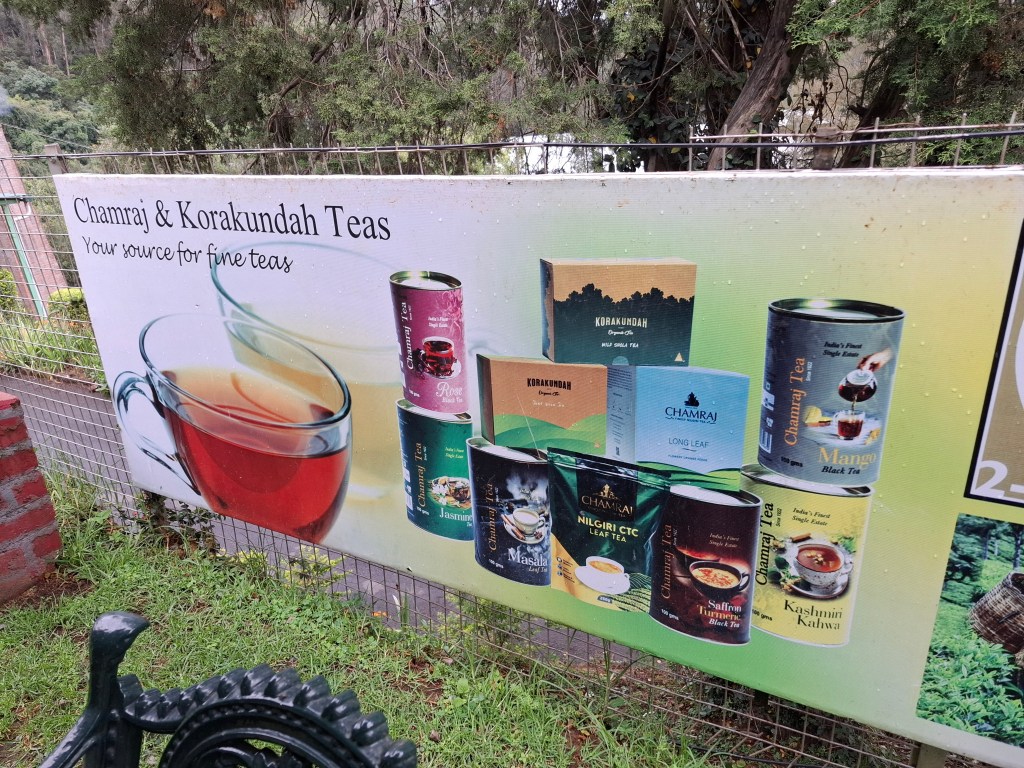
Of course, another cup of masala chai was needed to accompany this newfound love. It was at Chamraj that my pockets began to suffer. Somewhere between ginger, saffron and turmeric teas, I found myself discovering flavours I did not even know existed. In part 1 of this series, I joked that my colleagues had made it their mission to support the local economy when we explored the Coimbatore stores. On this occasion, however, I was the one doing my part for the Nilgiris economy. My suitcase bears witness to that. I returned to Sydney carrying enough tea to see me well into 2028. No regrets.


Beyond the tea, the scenery and the photographs, what struck me most about Ooty was the sense of preservation. In many parts of the world, progress often asks places to become something else. Efficiency replaces craftsmanship. Speed replaces patience. Heritage becomes something performed for visitors rather than simply lived. Ooty felt different. Despite the pressures of growth and the demands placed on its infrastructure, I never had the sense that everyone was simply waiting to leave. There was a quiet confidence in the people and the place that challenged a common assumption: that ambition always requires departure.
We often measure success by how far we go, whether to a bigger city, a bigger salary or a better opportunity elsewhere. But what if ambition sometimes looks like staying? What if success is found in stewarding what previous generations built? The tea hills never answered those questions directly. They simply stood as a quiet reminder that legacy belongs not only to those who leave, but also to those who remain
As we made the long journey back, considerably less cramped than we had been that morning (or perhaps we’d simply accepted our fate), I found myself reflecting on how often we measure development by how quickly places change. Perhaps another measure deserves equal attention. How well do they preserve what is already worth keeping?
Ooty reminded me that not every meaningful place in the world is trying to become something else. Some places understand the quiet strength of remaining whole. I think there is great wisdom in that for all of us.