Lessons from Coimbatore, India: Part 1 – Leadership, Learning and Human Dignity

Part One…
We often think travel changes us because of the places we visit. Increasingly, I have come to believe it changes us because it exposes the assumptions we did not know we were carrying. It unsettles our routines, broadens our perspective and gently reminds us that there is always more to learn.
In September 2025, I found myself boarding a flight to India for the second time with the team from Inspiring Greatness, the Christian charity where I have volunteered for many years. Inspiring Greatness is built on a simple conviction: that trapped within every person is the seed of greatness. Its mission is to help people discover their God-given seed of greatness by connecting, equipping and nurturing that potential through the skills, expertise and lived experience of people who are walking the path.
When I accepted the invitation, I expected to support the travel team’s engagements and experience another part of India. Instead, I discovered I had been invited to deliver a keynote address at Karunya University.
The invitation represented far more than the opportunity to stand behind a lectern. It felt like the convergence of more than eleven years working in public policy, a decade of mentoring young and emerging leaders, and the culmination of a doctoral journey that had challenged me to think deeply about how research can be translated into meaningful action. What excited me most, however, was not simply delivering a keynote. It was the opportunity to engage with university students, to exchange ideas with the next generation of leaders and to contribute, however modestly, to conversations that shape the future.
Even more meaningful was how the opportunity came about. It emerged through relationships. Looking back, I can trace a quiet thread through many of the opportunities that have shaped my adult life. Volunteering with Inspiring Greatness has introduced me to people, places and conversations I could never have orchestrated on my own. Through the vision of its founder and the community that has grown around it, I found myself encouraged to think beyond my immediate horizons, to pursue a PhD, and to keep asking how knowledge, faith and service might work together for the common good.
The invitation to Karunya University came through one such relationship with an alumnus whose heart for developing future leaders resonated deeply with the values we shared. It was another reminder that communities built around purpose rarely think only about today. They invest in tomorrow by opening doors for others.
This blog marks the beginning of a series of reflections from my travels through South India. Rather than simply recounting an itinerary, I hope to share the people, places, conversations and moments that challenged my thinking about leadership, faith, purpose and human dignity.
Some lessons emerged in lecture theatres, others around shared meals, roadside conversations and quiet moments of observation. Together, they reminded me that the richest journeys are rarely measured by the places we visit, but by the perspectives we gain along the way.
Every journey leaves us with lessons. These are some of mine, and Part 1 begins in Coimbatore, where the journey itself became the first teacher.
Arrival and getting our bearings
My second journey to India took me to Coimbatore, but unlike my first visit, I arrived with a deeper sense of purpose. What began as another overseas trip would become an invitation to contribute, to learn, and, ultimately, to see both India and myself through a different lens. I was travelling alongside three esteemed colleagues, each of us carrying not only luggage and presentations but also responsibility. We were there to contribute, to speak, to engage and, hopefully, to leave something meaningful behind.
The journey itself had already tested our patience. A short transit through Singapore became even longer because of airspace closures that altered travel routes and extended flying times. Somewhere between transit fatigue and navigating Changi Airport, two of us realised we had overlooked an important detail. Accustomed to travelling in an increasingly digital world, we had assumed electronic documentation would suffice. India, however, required a printed copy of our visa approval, a detail we had skimmed over in the busyness of preparing for the trip. What followed was a hurried detour to the concierge desk at Changi Airport to retrieve and print the paperwork while silently calculating every worst-case scenario in my head.
Needless to say, because of this oversight, Singapore’s famous Changi Airport butterfly garden remained unseen.
At the time, it felt mildly disappointing. In hindsight, it became strangely symbolic. This journey would certainly include moments of rest and enjoyment, but it would also require flexibility, adjustment and presence. Sometimes the itinerary we imagine gives way to the one we actually need. By the time we arrived in Coimbatore late on a Monday evening, exhaustion had already stripped away much of the glamour often associated with international travel.
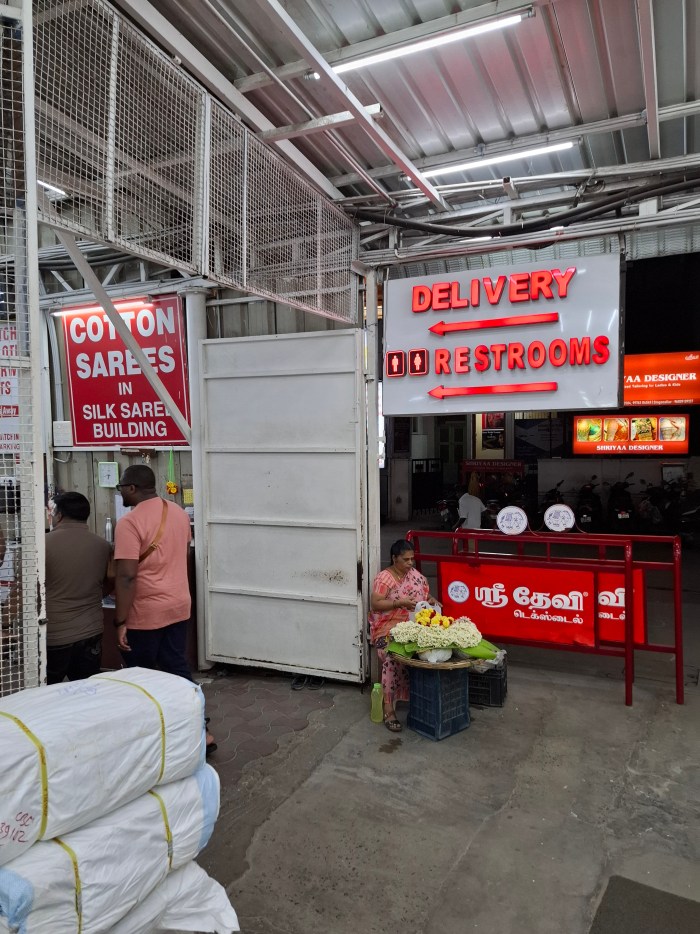

Tuesday greeted us with warm sunshine, humid air and the promise of a slower pace before our university engagements. Cotton clothing replaced anything remotely fashionable, sunglasses quickly became essential, and practical cross-body bags accompanied us as we headed downstairs for breakfast and our first proper conversation about the days ahead. Over a generous buffet that catered to both local and international tastes, we shared our hopes for the week before deciding to spend part of the day simply getting our bearings and experiencing the city.
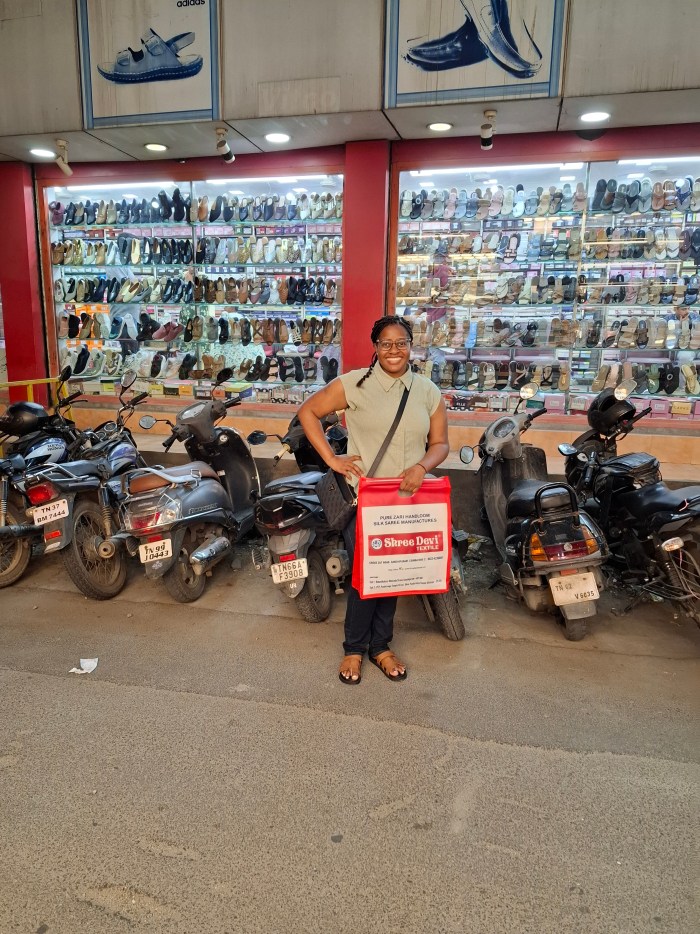
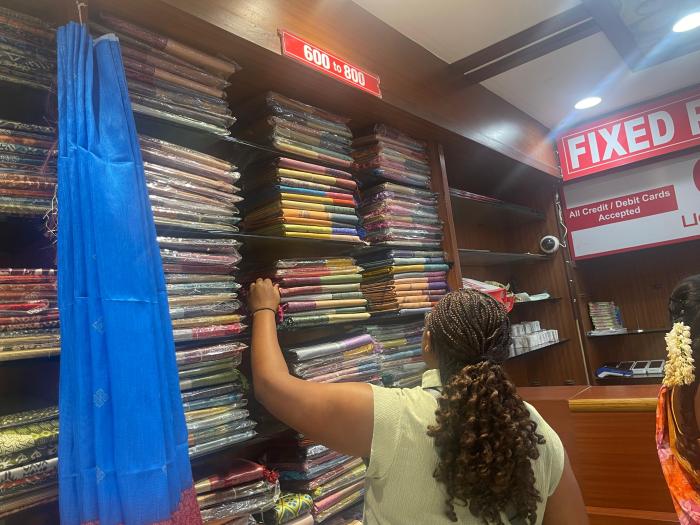
Our wanderings eventually brought us to one of Coimbatore’s bustling commercial districts. Admittedly, finding silk stores had featured somewhere on my personal list, but what stayed with me was never the shopping itself. It was what the silk represented. Generations of craftsmanship. Heritage. Trade. Skilled hands preserving traditions while supporting local livelihoods. Beauty and economics are woven together in the fabric itself.
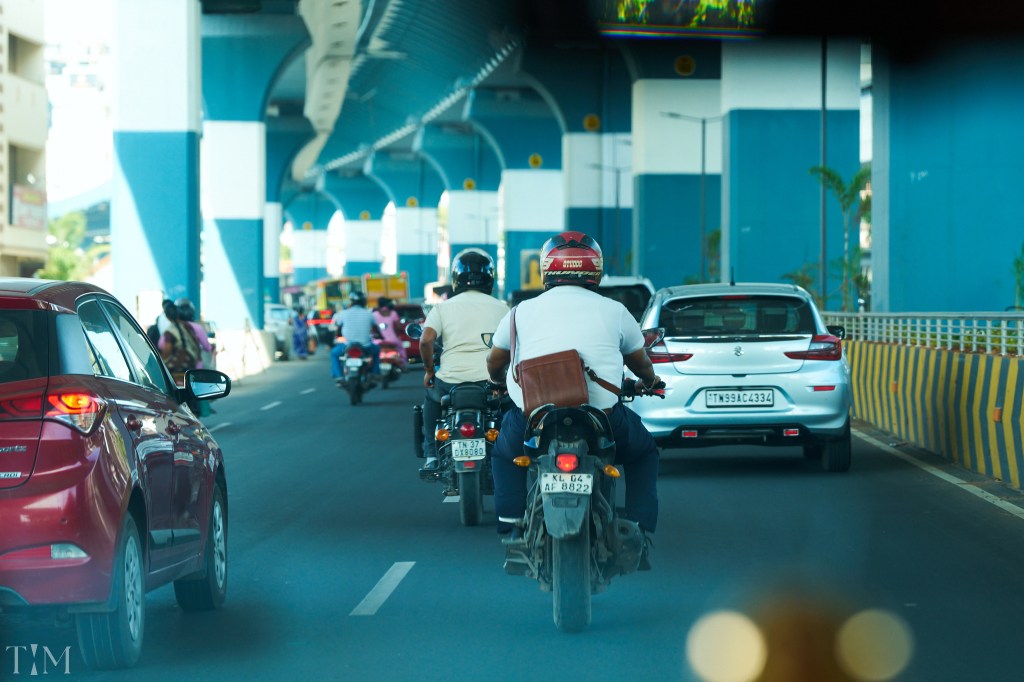
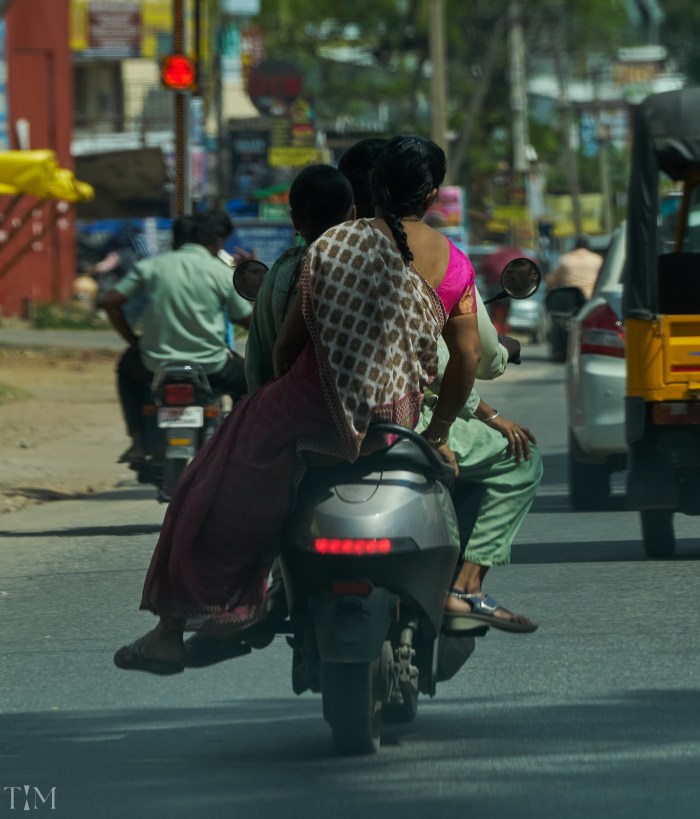
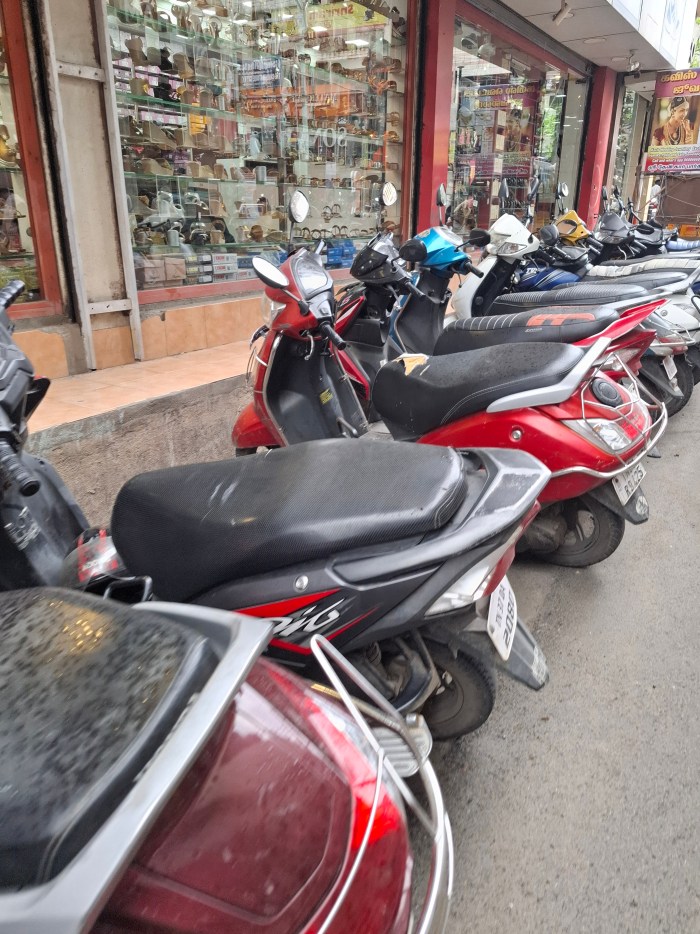
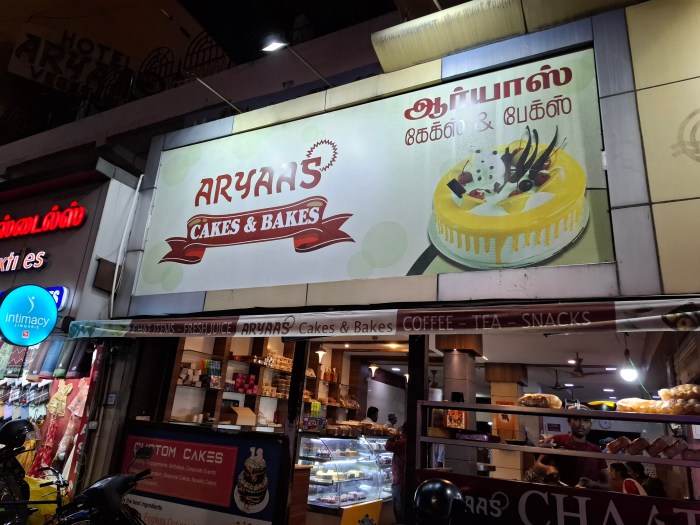
The streets pulsed with extraordinary energy. Busy hardly seemed an adequate description. Traffic moved with an almost improvisational rhythm. Shops spilt onto footpaths. Conversations overlapped. Commerce, family life and daily routines unfolded simultaneously. Faith, too, was impossible to miss. Places of worship, devotional images and public expressions of belief were woven naturally into everyday life rather than confined behind closed doors.
It is worth noting that I was also the only woman in our travelling party. Contrary to what some might assume, however, I was nowhere near the biggest shopper. Some of the gentlemen seemed remarkably committed to supporting the local economy!


A local lens
One of the unexpected gifts of the day was our driver, who quietly became one of our first teachers. As we travelled through the city, he shared stories about Coimbatore, pointed out landmarks we might otherwise have missed, and introduced us to local shopkeepers and restaurant staff who welcomed us with remarkable warmth. His presence and willingness to share reconfirmed my view that understanding a place rarely comes from guidebooks. More often, it comes through the generosity of people who call it home.
What struck me most, however, was not simply the movement or the colour. It was the coexistence of aspiration and inequality. Alongside thriving commerce were unmistakable reminders of economic hardship. One did not need policy reports or statistical tables to recognise that many people were navigating profoundly different realities. It revealed itself in the workers moving tirelessly between tasks, in conversations with people serving customers, and in the visible contrasts between prosperity and struggle existing side by side. Yet there was dignity too and a complexity that left an impression on me.
Too often, countries are flattened into simplistic narratives. They are either romanticised for their culture and spirituality or reduced to poverty statistics and development indicators. In walking through the streets of Coimbatore, I realised that there was a lot more that demanded observation before I made any attempts at interpretation. I reflected on how quickly our own comfort, certainty and assumptions can be disrupted when we step beyond familiar surroundings. I concluded that travel does not simply reveal another place. It often reveals ourselves.
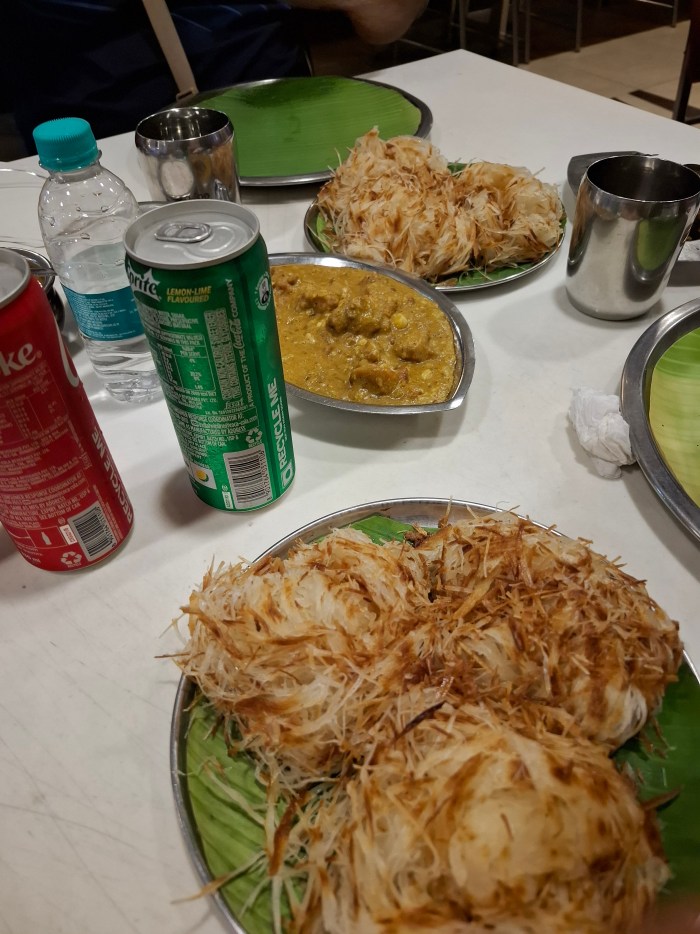
Dinner that evening was at Haribhavanam. If there is such a thing as South Indian comfort food, this was surely it. Our table soon filled with fragrant curries, tender chicken and lamb dishes, biryani and, my personal discovery of the evening, nool parotta, whose delicate, thread-like layers quickly won me over. As someone whose tolerance for spice and chilli remains very much a work in progress, there may also have been the occasional discreet sniffle between mouthfuls while trying to maintain some semblance of composure.
It was worth every bite!!!
More memorable than the food itself, however, was the experience of sharing it. Encouraged by our hosts, we embraced the local custom of eating with our hands, passing dishes around the table while conversations flowed as naturally as the hospitality. Around that table were people from different nations and experiences, yet the practice created an unexpected sense of familiarity. For those of us with Zimbabwean, Samoan and Indian connections, eating with our hands was not simply an Indian tradition we were observing; it was something that echoed aspects of our own cultural histories. It became another reminder that connection often happens through the simplest human experiences: sharing food, telling stories and creating space around a table. Between stories from our driver, insights into the local community and reflections on the days ahead, dinner became far more than a meal. It became fellowship.


Later that evening, our conversations turned towards the purpose of the trip. What would success actually look like? Would it be measured by the quality of our presentations, or by whether students felt encouraged, challenged and genuinely seen? Would our contribution end with applause, or would relationships be formed that extended well beyond the formal program?
By the time we each retreated to our rooms once back at the hotel, our thoughts on our upcoming presentations had evolved into more refined, intentional offerings shaped by preparation, humility and context. India had already begun teaching us. The first lesson was simple: before we seek to influence, we must first learn to observe; before we offer expertise, we must first approach others with humility. The deepest learning rarely begins at the moment we take the stage. It begins much earlier, in the moments when we choose to pay attention.
The university was waiting. So were thousands of students, conversations and encounters that would remind me that every opportunity to share knowledge is also an opportunity to receive it.
That is where Part Two of this series will begin 🙂


