When The Grass Is Greener On The Other Side…
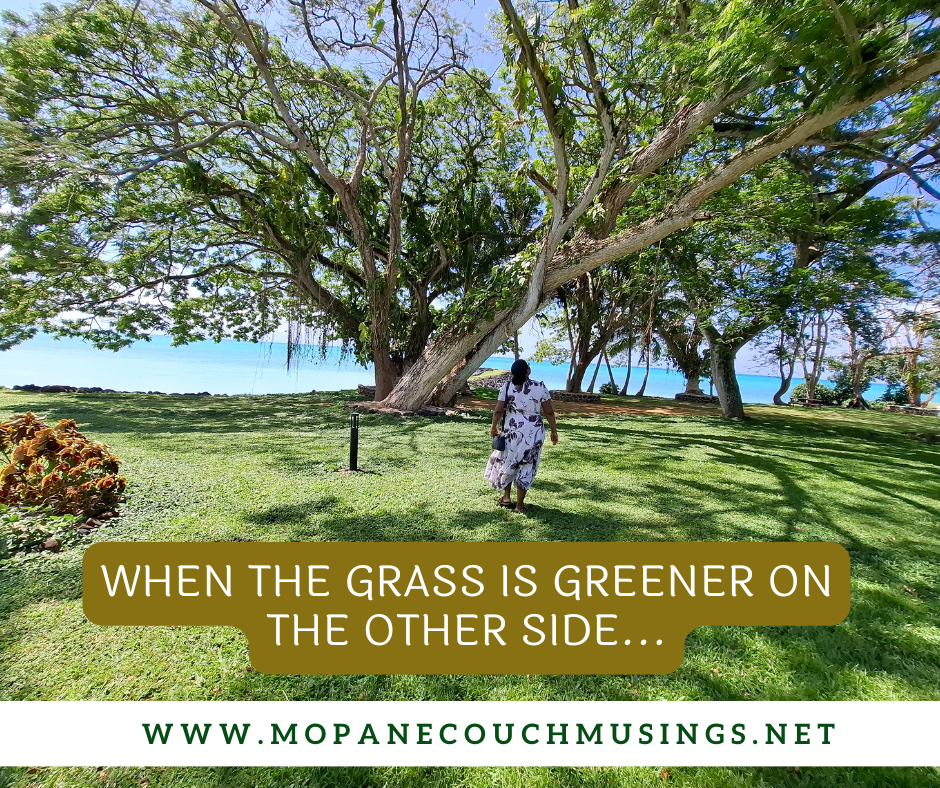
We’re at the start of a new quarter, and this is my first blog of 2026. I’ve been writing, just not publicly. Writing was something I longed to do post-PhD, and now that the season has arrived, I’ve been grateful for weekends without plans and the quiet luxury of unstructured time.
During the week, I took a lunch break walk. It had been one of those days stacked with back-to-back meetings and training, and I thought a lap around the block might reset my brain and rescue whatever energy was left for the afternoon. I ended up in the Domain, right in the heart of Sydney’s CBD.
I walked past the State Library and headed for the greens. Almost immediately, I came across a sign: “Temporary works underway. Excuse our appearance while we undertake important ground works in this area. The grass is greener on the other side, ready to enjoy.”
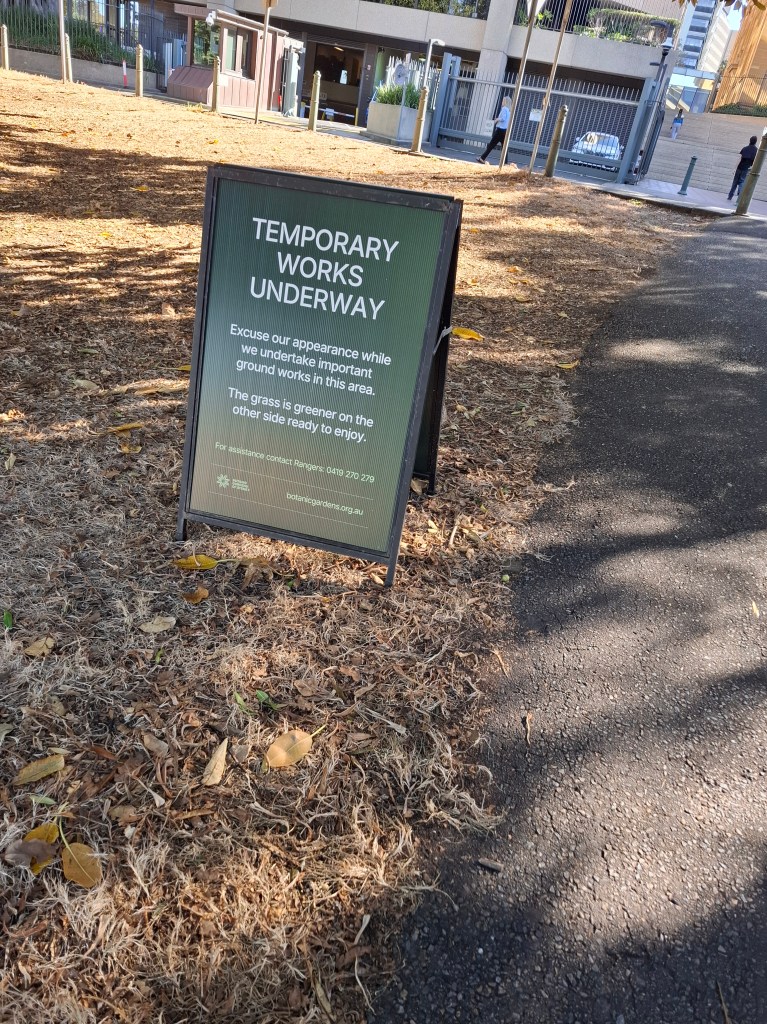
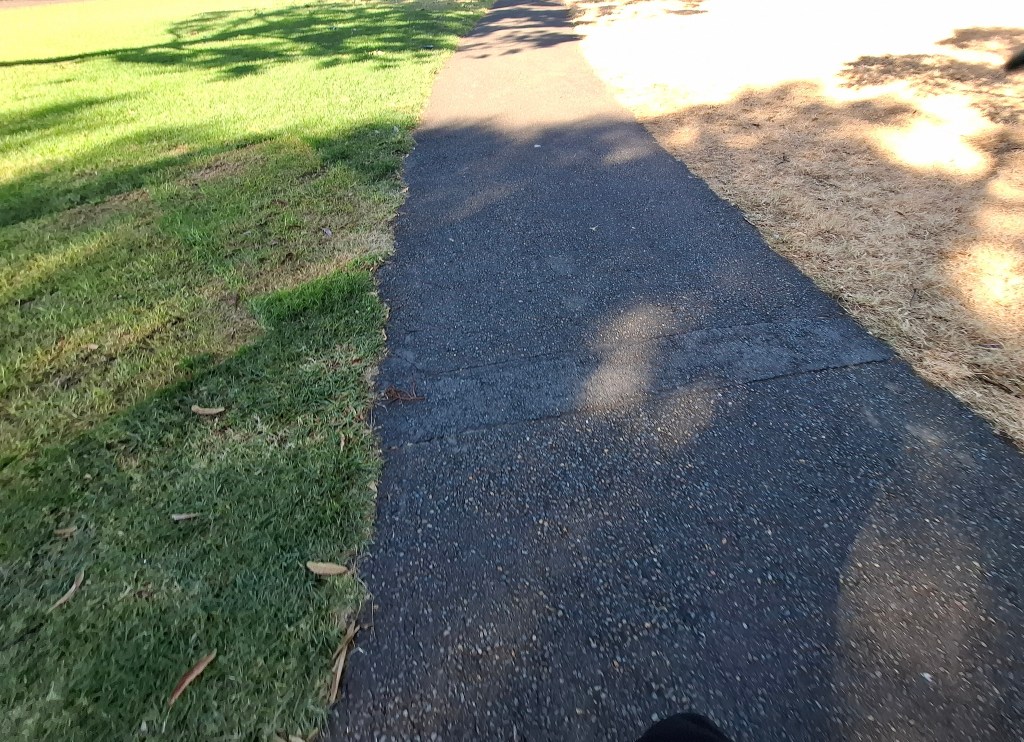
I stopped and laughed. Whoever wrote that deserves a raise. I looked across the path and, to be fair, the grass really was greener on the other side. Which felt mildly disrespectful given the timing of my life and my current writing themes. In the days before this, I’d been sitting with questions about self-examination, especially the kind that is less flattering: motives, reactions, patterns, and those moments where it is easier to blame circumstances or quietly exit than to stay and reflect.
So this first post of 2026 is a gentle re-entry to blogging, inspired by a park sign that made its point a little too efficiently.
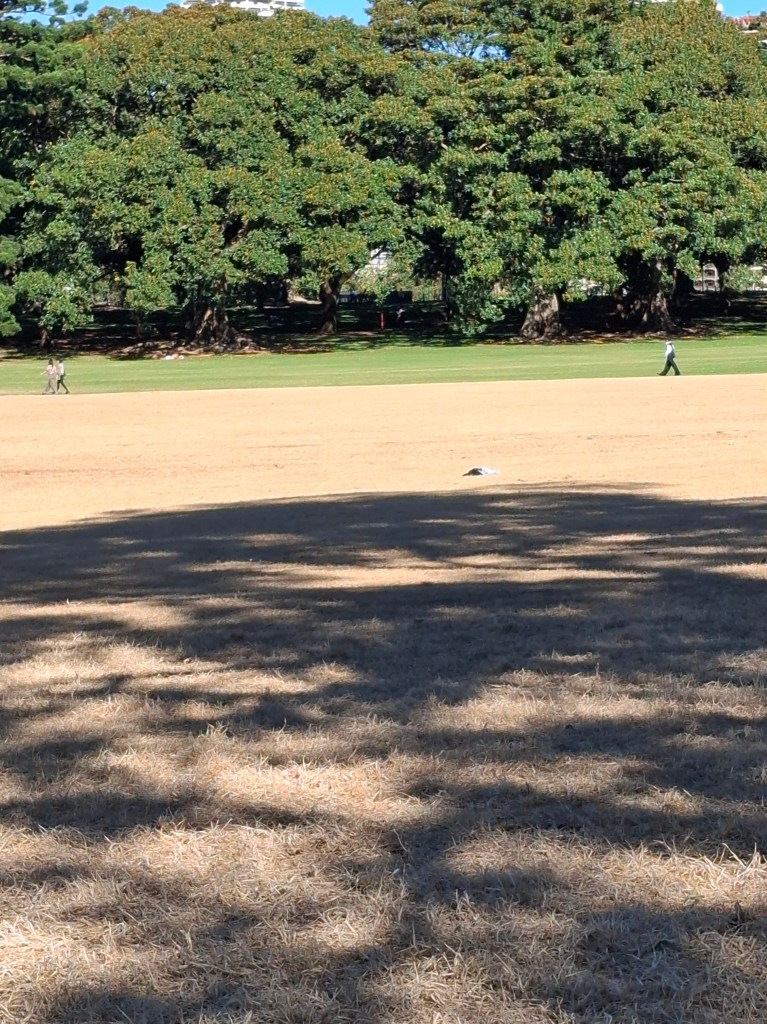
Naturally, I pulled out my phone to take some pictures and continued strolling. My pace dropped a few notches to match a rhythm that allowed my thoughts to settle as I fell into deeper reflection. I looked up and scanned the park in greater detail, spending more time on the larger stretch of dry, brown grass. Not even a hint of green. Just dryness everywhere. Quite a jarring contrast considering how lush the rest of the park was.
It was the kind of green that makes you think, yes, that side looks better. However, as I approached the greener patch, I realised there were dry patches there too. The green wasn’t uniform. Some areas hadn’t fully filled in and clearly needed more work. It was healthier, yes, but it wasn’t perfect. I thought to myself: the grass always looks greener… from a distance.
That’s where most of us get it wrong. We make decisions at a distance. We look at other people’s lives, environments, opportunities and construct a neat story about what is better. Then we use that story to justify movement, without interrogating what proximity would reveal. For instance, is the grass dry and brown because the soil has lost all capacity to nourish it? Is it seasonal? A result of care and tending? Or is the grass itself still in a stage of becoming?
Naturally, this made me think more closely about relationships—romantic and friendships—because each has its own stages. Seasons where there is tension with people you genuinely love. Misunderstandings. Friction. The kind that makes things feel off. Dry, even.
The cultural script now, more often than not, offers a simpler mantra: if it’s hard, leave. Cut it off. Protect your peace. Move on. Sometimes that is necessary. Not every relationship should be preserved. But sometimes what you are experiencing is not the end of something. It is the work of something—work that often looks like discomfort, having to have honest conversations, and the humility to confront your own patterns.
So the question then becomes: can you tell the difference between the end and the work of something? When something is being worked on, it often asks more of you before it settles—open conversations, honest naming of assumptions, and the courage to say what has been left unspoken, where there is safety to do so. In essence, the question is whether you are honest about the reality of things, and whether you have developed the skills, language, and discernment to recognise what must end, and what must be worked through.
“Greener” does not mean easier or better. Perhaps the real work is not deciding where to go next, but interrogating why you are so ready to leave, and whether that decision honours the people and spaces that have shaped you when the grass was green.
Take work, for example. It’s easy to look at the next role—the promotion, the salary bump, the visibility—and think: that’s the greener side. In many ways, it is. What gets overlooked is that “greener” at that level comes with weight. More accountability. More pressure. More scrutiny. More complexity. Greater consequences. You don’t just get paid more; you are required to carry more. So, if your motivation is simply to escape your current discomfort, you will meet a new version of it—just at a higher level. Different environment, same unadjusted capacity.
The part we rarely say out loud is this: even when you move, you don’t move beyond process. Time, season, chance, opportunity, effort—they still apply. That greener patch didn’t become green by accident. It was tended. Maintained. Repaired. And the dry patch? It’s in its tending season.
So “greener” still means work. And at some point, it too will have a season where it looks less impressive. Which means the decision is not simply: should I stay or should I go? It’s: Do I understand what is actually happening here? Am I reacting to discomfort, or responding with discernment? Have I tested this with people who will challenge me, not just agree? And for the faith-based among us—have I actually taken this to God? If I move, am I prepared to carry what comes with it, in every sense?
There is a great discipline required here, and it is about staying honest.
This is the part I’ve had to sit with personally when considering my own “greener pasture” moves. And if I’m honest, some of those decisions were retrogressive. The dry season still came. And there is nothing more humbling than realising it wasn’t that the grass was greener—you simply misread a seasonal shift that required growth —and expected it without the work.
It’s easy to tell a neat story about why something didn’t work. Why the relationship wasn’t right. Why an environment no longer served you? It’s much harder to ask: Did I stay long enough to understand the season? Did I avoid necessary conversations and fill in the gaps myself? Did I confuse discomfort with misalignment? And if I did leave, am I certain I’m not just restarting the same lesson, waiting to learn what I’ve been avoiding? In simpler terms: where might I be the problem? More importantly, am I prepared to steward what I’ve stepped into? Because you don’t get to choose greener grass and then disengage from maintaining it. That’s not how growth works.
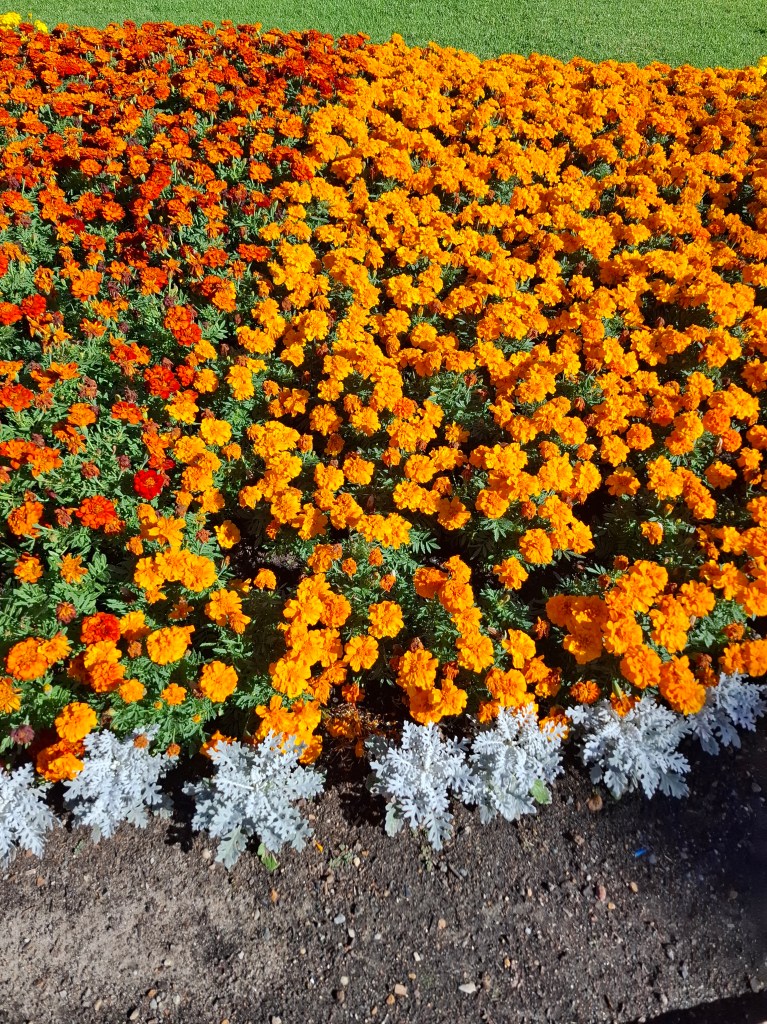
By the time I realised how far I’d walked, I had made it to Hyde Park near St James. I stopped at a flower bed that was thriving. It was vibrant, almost showing off. Naturally, my mind went back to the council sign in the Domain. I had to laugh, and the second series of thoughts I had – the more literal kind. The sign was clear and explicit, and I also thought about how we often see things exactly as they are, yet in our ‘superhero’ complexes, we convince ourselves we can single-handedly turn any patch into a green pasture. That’s a longer conversation for another day.
What I will say is this: context matters. Timing matters. Seasons matter. And so do your decision-making frameworks—the kind you build when you slow down enough to ask what is actually happening, not just what feels uncomfortable. Then, beyond that, ask yourself how willing you are to be honest about what is before you before making your next move.
Like I said, the writing cave has been both intriguing and confronting. As I settle back into it, I’ll leave you with this: the grass may be greener, but green is not proof of ease—only evidence of work not yet seen. And even then, it comes at a cost.
Hopefully, I haven’t left you a little discombobulated. Perhaps a previous piece I wrote on 6 Lessons to enrich your relationships might be my peace offering 😊
With love,
– Dr EF


 Mopane Couch Musings